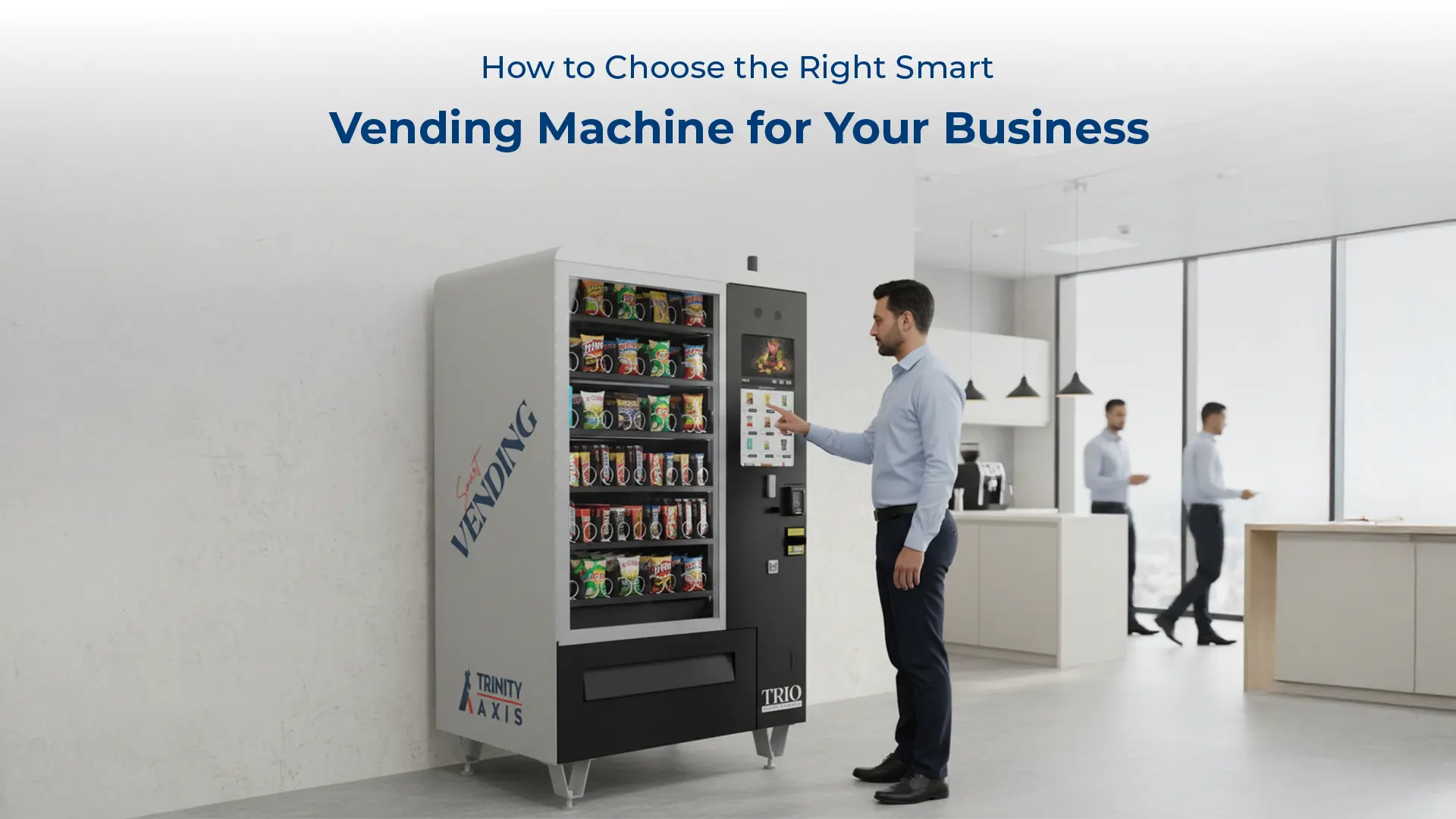
How to Choose the Right Smart Vending Machine for Business
 By
By  8 minutes
 Posted on: 15 May, 2026
In 2026, customers increasingly expect easy access to products. From corporate offices to hospitals, the demand for 24/7, cashless, self-service retail continues to rise. Businesses are turning to smart vending solutions to meet these evolving consumer needs.
While the vending industry is well-established, current market trends show a shift toward high-end aesthetics and enhanced user experiences. Smart touchscreens, digital payments, and connected software systems have elevated conventional machines into intelligent retail platforms powered by data and automation.
More than 45% of the vending market has already shifted toward smart technologies, and more than 53% of vending machine operators plan to upgrade their legacy systems within the next two years to adopt smart inventory management and contactless payment infrastructure.1
1. What Are Smart Vending Machines?
A smart vending machine is an automated retail hub that actively communicates with and connects to the operator and customer in real-time. It builds upon the standard mechanics of traditional dispensers with the integration of internet connectivity. It combines physical hardware with cloud-based software to manage operations remotely. Smart machines expand the capabilities of traditional vending systems with more transparency, flexibility, and convenience.
Smart vending machines include:
- Continuous Connectivity: The machine stays online via Wi-Fi or 4G/5G.
- Inventory Tracking: The system records which products sell and at what times to help manage inventory levels. This helps improve sales based on consumer demand.
- Touchscreen Interfaces: Screens display detailed product information and images, nutritional facts, and videos. They also allow users to buy multiple items in one transaction.
- Remote Management: Retail owners can update prices and view restocking lists from a computer or phone.
2. Why Choosing the Right Smart Vending Machine Matters
Investing in the right vending machine helps maintain your brand reputation and optimizes your revenue. On the contrary, a less efficient one can lead to:
- Increased Downtime: If a machine cannot send an alert about a mechanical error or a temperature change, it remains out of order until a technician visits, resulting in lost sales opportunities.
- Inventory Waste: Selling the wrong products in the wrong location leads to unsold items. Smart machines show exactly what customers are buying and provide insight into consumer trend analytics.
- Payment Issues: In today’s mobile-first economy, consumers may not always have their wallets on them, but they are never without their smartphones. Modern shoppers now expect seamless digital wallet and QR code integration. Failing to offer these options creates a point of friction that can lead to lost sales and fewer repeat customers.
3. Key Factors to Consider When Choosing a Smart Vending Machine
i. Business Environment
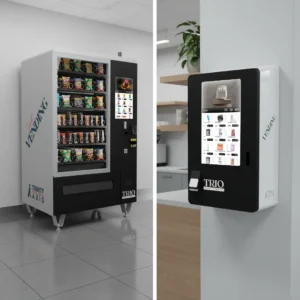
Decide where your machine will be installed. Outdoor locations need weather-resistant materials and strong locks. Beyond offices and hospitals, the right fit can also vary by workplace, gyms, and other public spaces. Indoor break rooms may require smaller models, like the TRIO Compact, that attach to walls. The right setup also depends on whether you plan to serve employees or the general public.
ii. Product Type and Capacity
Consider the type of food you are planning to sell, whether it is a snack and beverage setup or another format; beverage machines are also worth considering when chilled drink capacity is a priority. Consider its quantity and how much room it may occupy.
Your product mix should match the site, with beverages and drinks making sense in some locations while fresh food or frozen food may be a better fit in others.
- Elevator Systems: These move products gently to the delivery bin to help prevent damage.
- Adjustable Internal Trays: These allow you to change product row sizes as inventory changes.
iii. Payment Options
Ensure your machine supports modern payment methods, including cashless payment options and contactless payments:
- Mobile Wallets: Apple Pay and Google Pay, plus tap-to-pay cards
- Internal Cards: Employee badges or student IDs
- Single Transactions: Allowing a user to buy several items in one payment
Faster tap-to-pay checkout helps customers purchase items quickly and reduces friction at the machine.
iv. Software Capabilities
The Vending Management System (VMS) should allow you to:
- Change prices instantly from a remote location and remotely manage software settings.
Run digital ads on the screen. - Perform remote tests to check if the machine is working.
- Some platforms also support touchless interaction on connected screens or interfaces. AI can analyze large sales and usage datasets to guide pricing and merchandising, while also enabling personalized product recommendations.
v. Data, Inventory Management, and Reporting
Make sure it offers a centralized dashboard with:
- The best-selling items
- The busiest times of the day
- What products have gone out of stock
- Visibility into inventory levels and live sales
Stronger reporting can also support predictive analytics for demand planning and help increase sales. Some platforms even send predictive maintenance alerts that can prevent sudden mechanical failures in smart vending machines.
vi. Maintenance and Reliability
Choose a provider that offers ongoing support plus dependable maintenance and reliability:
- Remote Fixes: Solving software issues without traveling to the machine.
- Product Sensors: Technology that confirms a product was dispensed or returns money to the customer automatically.
Predictive maintenance alerts can help prevent sudden mechanical failures before the machine goes offline.
4. Cost vs. ROI: Evaluating Your Investment
Smart vending machine prices vary widely based on features, size, and refrigeration requirements, and they often come with a higher purchase price than mechanical units, but the return on investment (ROI) is often faster while reducing staffing/restocking costs.
| Feature | Traditional Vending | Smart Vending |
|---|---|---|
| Initial Cost | $2,000 – $4,000 | $5,000 – $10,000+ |
| Operational Cost | High (Manual checks) | Low (Data-based refills) |
| Revenue Potential | Product sales only | Ads and multi-item sales |
| Average ROI Period | 18–24 Months | 12–15 Months |
The estimates mentioned above are relative and can be subject to change based on the complexity of the hardware units, payment methods, and software installations that your business demands.
Entry-level snack machines usually cost less than refrigerated beverage units, while smart fridge models are typically the most expensive format.
Common ways to acquire this vending equipment include buying outright for the lowest long-term cost, leasing for predictable monthly payments, and revenue-share models for little upfront investment.
Common Mistakes to Avoid:
- Limited Payment Options: Choose a vending hardware or machine that allows multiple payment options like credit cards, mobile apps, and QR codes.
- Poor Signal: Do not place a smart machine in an area without a strong internet or cellular signal.
- Ignoring Upgrade Kits: If you own functional older machines, you do not have to replace them. There are kits that allow you to upgrade your traditional vending machines into smart vending machines.
5. How Trinity Axis Supports Your Business
Trinity Axis is a company that supports businesses, retailers, and vending machine business operators with integrated hardware and software for unattended retail, offering several options tailored to your unique business environment. It also helps create a scalable revenue stream for a modern vending business or broader vending business expansion.
TRIO Diamond
The TRIO Diamond is a full-size machine built for high-traffic areas like airports or large hospitals, and it also works well in unmanned retail settings. It features a modular design that holds over 320 products, spanning snacks, beverages, food categories, and even electronics. Equipped with a 21.5-inch HD touchscreen, it allows customers to view product details and purchase multiple items in one transaction, making it a powerful retail platform for busy locations.
TRIO Compact
For locations with limited floor space, the TRIO Compact offers a slim alternative without sacrificing technology. It features the same high-resolution touchscreen as the larger models but can be mounted on a wall or a dedicated stand. This makes it an ideal choice for office break rooms or gym hallways where a larger, traditional machine would not fit.
TRIO Revision Kit
You don’t necessarily need to buy a whole new machine to gain smart features. The TRIO Revision Kit is a hardware set that upgrades older, traditional machines. By adding a touchscreen and Internet connectivity, this kit allows your current machines to accept mobile payments and display digital ads, providing a cost-effective way to modernize your existing inventory.
TRIO VMS

All Trinity Axis hardware is powered by the TRIO Vending Management System (VMS), which can be used across smart vending machines, kiosks, and self-checkout kiosks where applicable. This cloud-based software allows you to track sales, update prices, and monitor inventory levels in real time from any computer or smartphone. Operators can also integrate loyalty programs and monitor live activity across unattended retail endpoints through the same platform. By providing constant data on how your machines are performing, the VMS helps you reduce manual checks and maximize your daily profits. When paired with smart fridges or AI-powered coolers, computer vision can support seamless checkout and centralized oversight.
6. Final Thoughts
Upgrading to a smart vending machine transforms a basic service into a sophisticated, data-driven retail operation. In today’s convenience-driven market, the right technology isn’t just an upgrade — it’s what keeps you competitive.