The Power of Data: Leveraging Customer Feedback for Business Growth
 By
By  4 minutes
 Posted on: 30 Mar, 2026
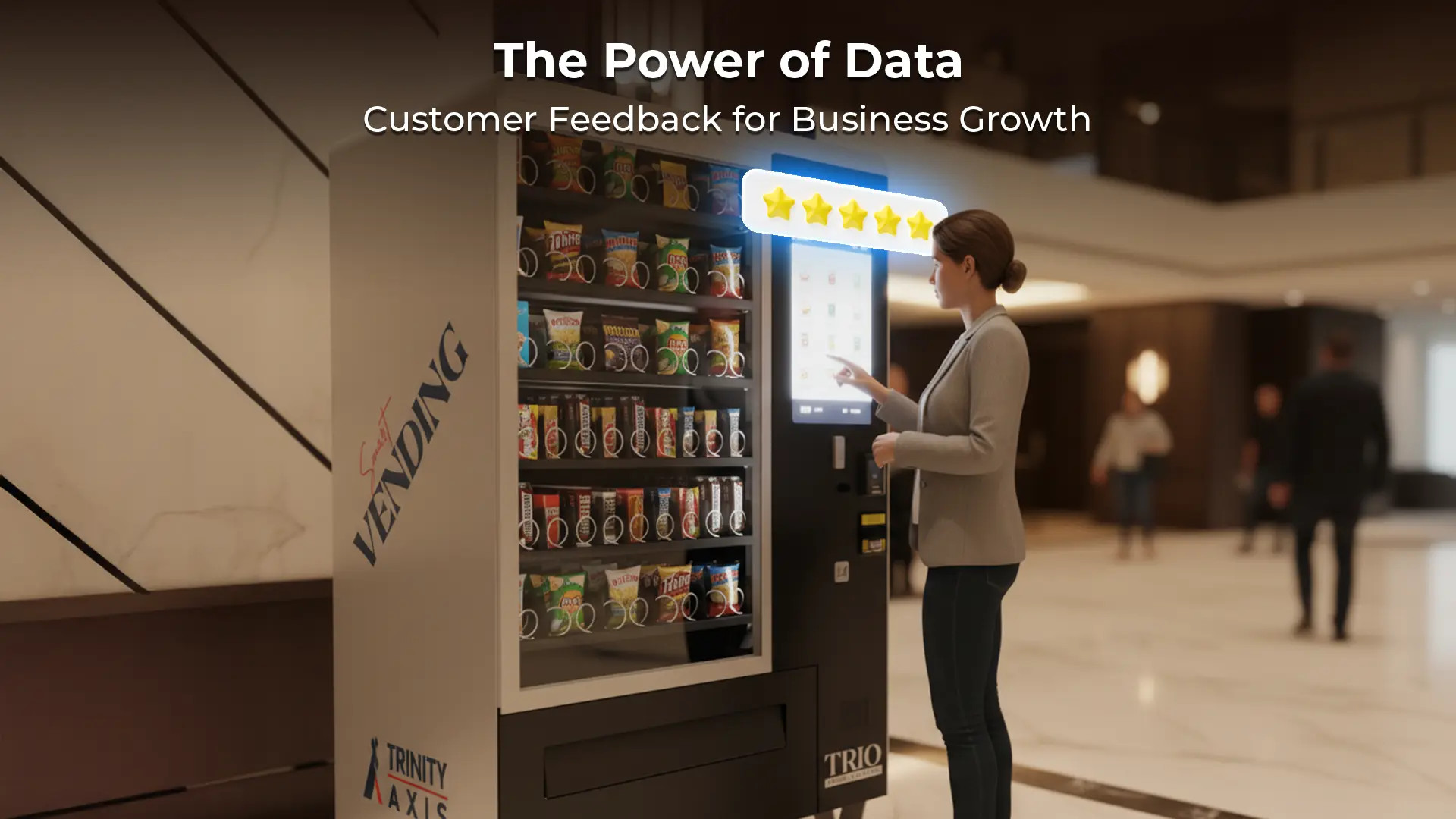
In the fast-paced world of retail and vending, customer feedback is a crucial driver of growth and innovation. By actively listening to and analyzing feedback, businesses can gain valuable insights into customer preferences, pain points, and expectations. Leveraging this data not only helps in refining product and service offerings but also enhances customer satisfaction and drives business development.
The Value of Customer Feedback

Customer feedback is an invaluable asset for any business. It offers a direct line to understanding what customers truly want and need. Through feedback, businesses can identify trends, recognize areas of improvement, and develop products and services that better meet customer demands. This continuous loop of feedback and improvement is essential for staying competitive in today’s market.
In the world of automated retail, where consumers do not interact directly with staff members, being intentional in providing a variety of feedback channels is vital for a healthy relationship between the business and consumer. 72% of consumers believe that companies that ask for feedback care more about providing good service (Consumer Expectations for Customer Service Don’t Match What Companies Deliver, 2015), and 85% of companies that prioritize customer feedback see an increase in revenue, showing the direct financial impact of listening to customers (Schwager & Meyer, 2017).
Modernizing Data Collection Methods With Innovative Feedback Channels
Data from Forrester Research highlighted that 73% of customers said that “valuing their time is the most important thing companies can do to provide them with good customer service” (Leggett, 2016). In the case of automated retail solutions, such as smart vending machines and self-service kiosks, this means providing the customers with speedy service/assistance and options to give quick feedback with minimal effort required.
Technology has revolutionized the way businesses collect customer feedback, allowing for quicker and more efficient avenues. Modern methods such as online surveys, mobile apps, interactive kiosks, real-time chatbots, and social media platforms make it convenient for customers to share their thoughts without using up too much of their time. These tools not only simplify the feedback process but also ensure that businesses receive real-time insights into customer experiences.
Turning Feedback into Actionable Insights: Harnessing Data and Analytics

77% of customers view brands more favorably if they both proactively seek and apply their feedback (Microsoft, 2017). A diversity of feedback channels are useless for growth unless you actually act on the insights they provide. Companies that actively use customer feedback for product improvements and service enhancement see a 10% increase in customer retention, and 89% of customers are willing to share a positive review after a company takes action based on their feedback (Balasubramanian, 2024).
Advanced analytics tools and data techniques are crucial in transforming raw customer feedback into actionable insights. These tools help you report, organize, and prioritize the feedback you receive. By analyzing patterns and trends in the feedback, businesses can make informed decisions about product development, marketing strategies, and customer service improvements. This data-driven approach ensures that feedback is not just collected but also utilized effectively.
After changes are made to product or service offerings, make sure to “close the loop” with your customers. Be quick to respond to your customers’ initial feedback and inform them of changes you have made so that your response to their feedback does not go unnoticed. Businesses that close the loop on customer feedback are 2.5 times more likely to retain their customers (Balasubramanian, 2024).
Personalizing Customer Experiences
Customer feedback plays a key role in personalizing the shopping experience. 76% of customers expect personalization (Bishop, 2021) and brands that excel at personalization are 71% more likely to report improved customer loyalty (Personalizing Growth, 2024). By understanding individual preferences and behaviors through purchasing trends and customer feedback, businesses can offer tailored product recommendations and personalized services. This not only enhances the customer experience but also drives sales and customer loyalty.
A Scalable Future
Customer feedback is a transformative force in the automated retail and vending sectors. By leveraging this valuable data, businesses can enhance their product offerings, improve customer satisfaction, and drive significant growth. Embracing modern feedback collection methods and utilizing advanced analytics to turn feedback into actionable insights are essential steps in staying competitive and meeting the evolving needs of current and future customers.
References
Bishop, C. (2021, December 8). 31 Customer Service Statistics You Need to Know. Zendesk.
How to Improve Customer Satisfaction – Qualtrics. (2022). Qualtrics.
Personalizing growth. (2024, June 11). Deloitte Insights; Deloitte.